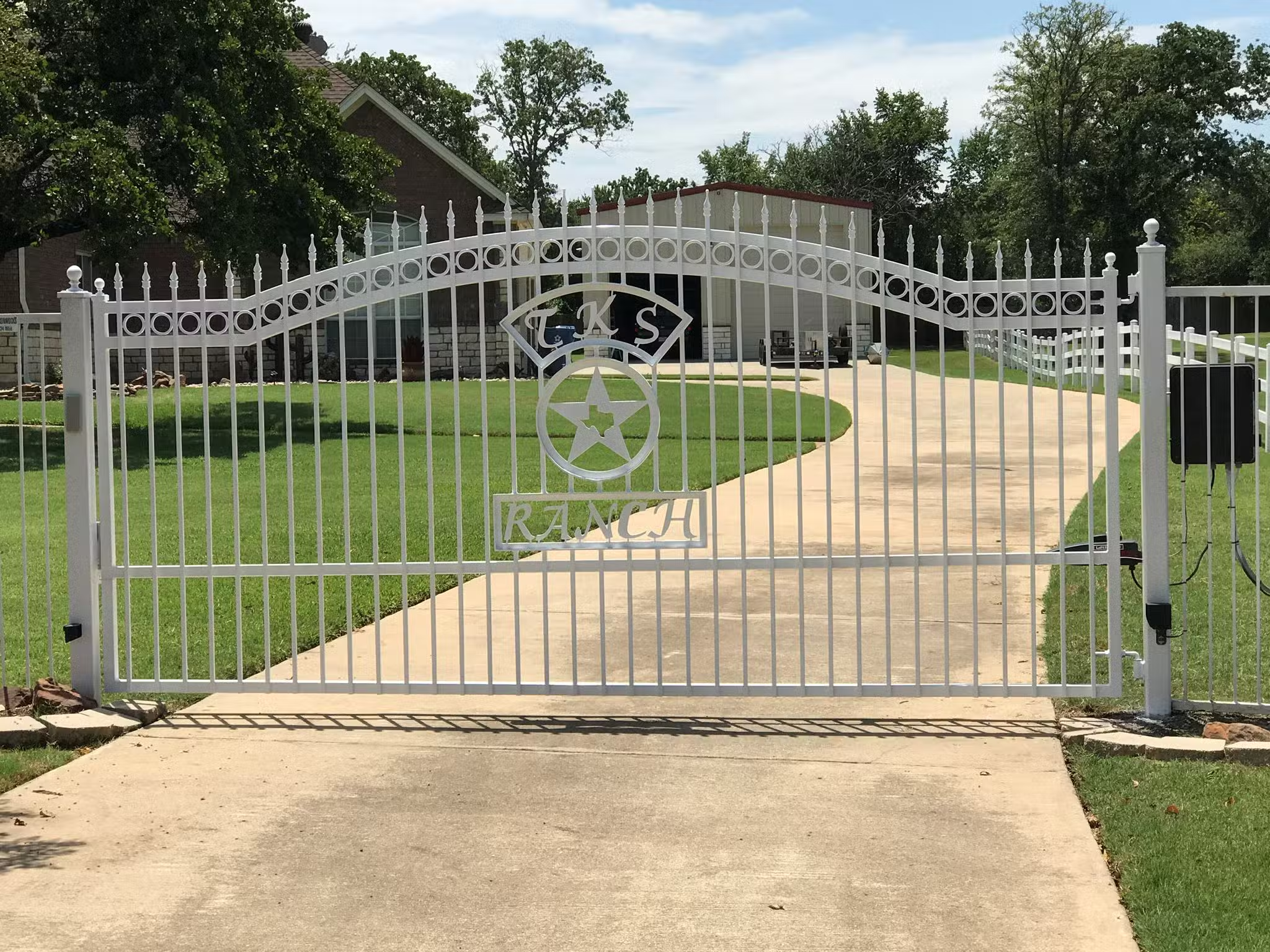
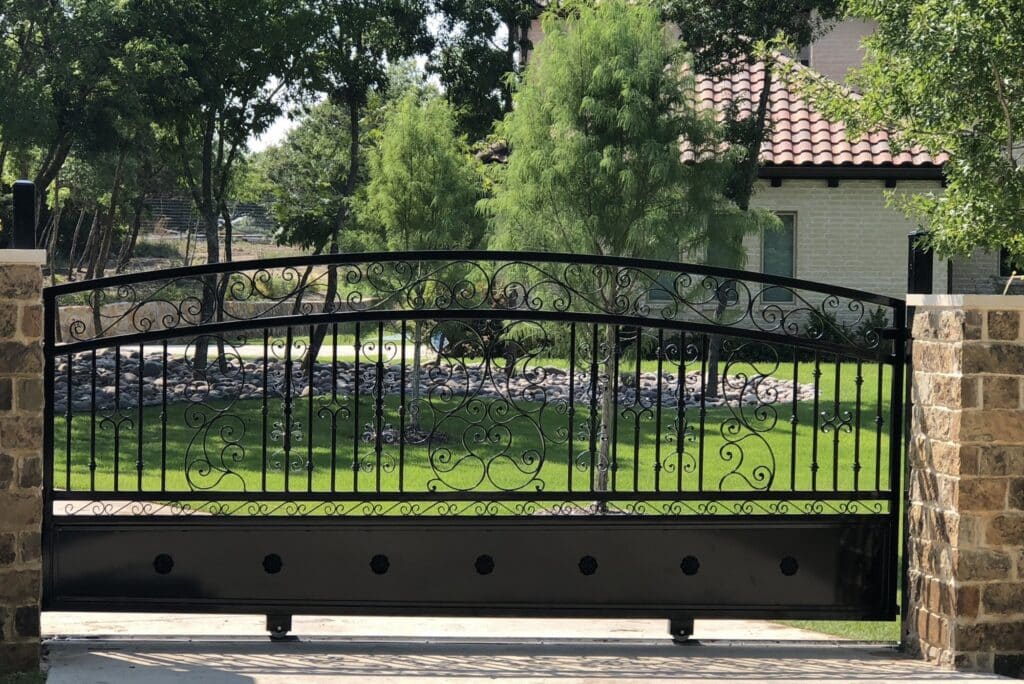
Highland Park’s lots and zoning rules shape the gates we see here. The town’s development began in 1907, and its alleys and front-yard rules produce a handful of repairs that come up time and again.
Alley-Access Slide & Swing Gates
Many Highland Park homes have rear garages off the alley, often behind an automated gate. These gates get heavy use, cycling many times a day as family members and service vehicles come and go, and trash-day traffic in the alley adds more chances for a clipped post or a gate nudged off its track. Since narrow alleys and tight approaches leave little room for a swing gate to clear, slide gates are common here, and we repair both. On every alley gate call, we check the exit loop and safety sensors because a gate closing on a car in a narrow alley is a real hazard.
Double Swing & Bi-Parting Driveway Gates
The town doesn’t allow fences in residential front yards, so driveway gates sit at or behind the front building line, often hung between masonry columns. Bi-parting gates have two leaves that meet in the middle, and these heavy panels can sag over time as weight bears down on their hinges and the columns or posts they hang from. Common repairs usually involve new hinges or re-anchoring the posts. On automated pairs, we also resync the two operators to ensure both leaves close together and meet perfectly at the center.
Wrought Iron, Steel & Wood Gates on Older Homes
Some older Highland Park properties still feature ironwork with its original hinges and an opener added years later. Those retrofits can work well, but original hinges weren’t built to handle the strain of motorized cycles. To make sure this system runs smoothly, we weld cracked joints, repair broken pickets, and replace worn hinges. We also check whether the opener is sized for the gate’s weight (since an undersized operator wears out fast on heavy iron), and steel and wood gates on older properties are inspected for rust or rot at the hinge points.
Pedestrian & Courtyard Gates
Side-yard and courtyard gates are usually controlled by a keypad or a mag lock. When one won’t release or won’t latch, we test the lock and keypad first. The closer (which pulls the gate shut after someone walks through) gets checked next, because a weak closer leaves the gate just short of latching.